When cars stack up at a drive-thru lane, every second is money. A missed word at the speaker, a slow handoff or a dropped headset connection all cost customers. That is why operators across the Gulf are looking at HME drive thru in Saudi Arabia equipment in 2026. This guide explains what the technology includes and how to evaluate it for your site.
It is written for restaurant owners, franchise managers and pharmacy or bank operators planning a new lane or upgrading an old one.
What Makes Up a Drive-Thru Communication System
A professional lane is more than a speaker and a window. It is a connected chain of vehicle detection, order-point audio, staff headsets, timers and displays. Each link affects speed and accuracy.
Main components
- Vehicle detection loops or sensors that signal a car at the menu board.
- Outdoor speaker post with echo control and weatherproofing.
- Wireless headsets for order takers and runners.
- Base station linking audio, timers and the point of sale.
- Timer displays that show service speed to managers.
Operators comparing professional platforms often start with the HME drive thru in saudi arabia solutions page, which describes headsets, base stations and timing tools in one place.
Why Speed and Accuracy Decide Profit
Drive-thru lanes can account for more than half of quick-service sales. Each extra ten seconds per car reduces cars served in peak hour. Over a month that becomes a large revenue gap.
Accuracy matters just as much. A wrong order means waste, refunds and an unhappy customer. Clear audio at the order point is the first defence against both.
Saudi Climate and Operating Conditions
Heat, dust and strong sun are real design constraints. Outdoor speakers need sealed housings, and screens need sun-readable brightness. Headsets must stay comfortable during long shifts in warm kitchens.
Peak times also differ locally. Evenings, post-prayer rushes and weekends create sharp spikes. Your lane design and staffing plan should follow those patterns rather than generic charts.
Lane Layout Options Compared
| Layout | How it works | Strength | Trade-off |
|---|---|---|---|
| Single lane, single order point | One car at a time orders | Simple, low cost | Limits peak throughput |
| Single lane, dual order point | Two cars order in parallel | Higher capacity in same road | Needs careful staffing |
| Dual lane merge | Two lanes converge at pickup | Highest throughput | More space and signage |
| Pre-order and curbside | App orders handed to cars | Spreads demand | Requires app integration |
How to Evaluate a System Before Buying
- Visit a live site that already uses the equipment and listen at the speaker.
- Measure order-point audio clarity with traffic and ambient noise present.
- Check headset battery life against your longest shift.
- Ask how timers connect to reporting and your point of sale.
- Confirm spare-part stock and service response time in the Kingdom.
One practical tip: record sample orders at your busiest hour and replay them for the vendor. If the system struggles with that real audio, a quiet demo room tells you nothing.
Compliance and Safety Reading
Wireless equipment must comply with national spectrum rules, so confirm that devices carry approval from the Communications, Space and Technology Commission. For hearing safety guidance on headset volume, the World Health Organization’s hearing loss fact sheet is a sound reference.
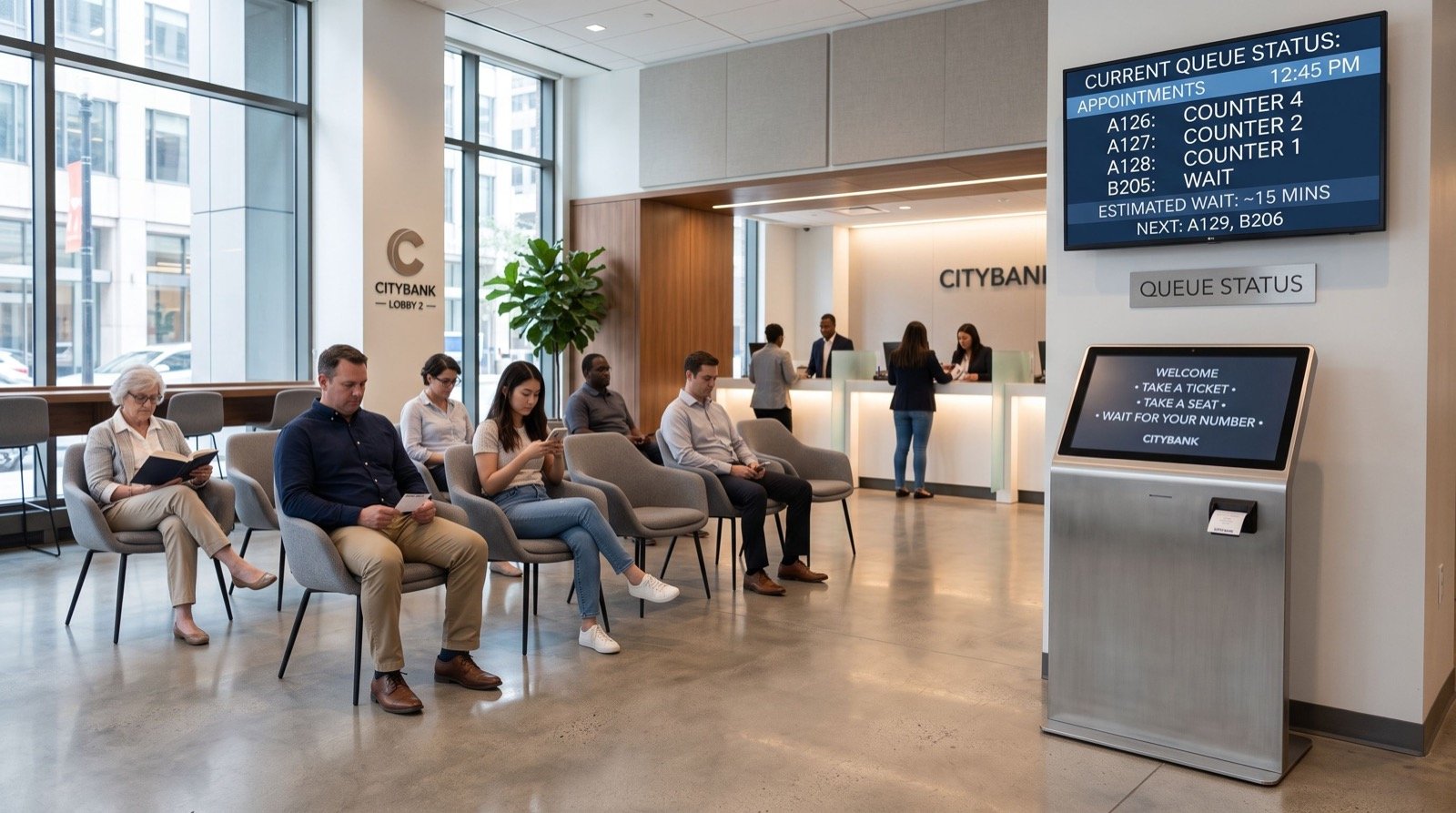
Service flow matters well beyond food. If your business also runs counters, the queue management system in pakistan overview shows how digital tickets complement lane technology in multi-channel operations.
And as with any supplier, ask for references. Our earlier note on picking reliable local experts makes the same point about verifying work before committing.
Staffing the Lane for Peak Hours
Technology supports staff but does not replace them. A good lane has clear positions: order taker, cashier, food assembler, runner and a floating supervisor. In the peak hour, each role should have a backup who can step in within seconds.
Cross-train at least two people per position. Illness, late arrivals and breaks are certain, and a lane with no spare capacity collapses at the first absence.
Scripts and short phrases
Short greetings, repeated confirmation and a standard closing line reduce talk time and mistakes. Practice them in a ten-minute briefing before the evening rush. Even small gains, such as two seconds saved per greeting, accumulate across hundreds of cars.
Technology Add-Ons Worth Considering
- Order confirmation display that shows items and price to the driver.
- Digital menu boards that hide sold-out items automatically.
- Licence-free mobile ordering with a dedicated pickup bay.
- Kitchen display screens that sequence orders by arrival.
- Weather-proof canopies for staff and equipment.
Budgeting for a New Lane
Include civil work, power, data cabling and signage as well as electronics. Many projects underestimate the cost of road marking, kerbs and bollards, which protect staff and equipment. Plan a small contingency for unforeseen items such as drainage or utility relocation.
Finally, schedule a post-launch review at 30 and 90 days. Compare service times, order accuracy and customer comments with your pre-launch baseline. The review tells you whether to add a second order point or adjust staffing, and it keeps the investment honest.
Maintenance routine
Create a weekly checklist for the lane. Test each headset battery, wipe the speaker grille, confirm the vehicle sensor triggers and verify the timer clock. Replace worn ear cushions and cables early. Ten minutes of checks on a quiet morning prevents a dead headset during the Friday evening rush, when the lane earns most.
Keep a small box of spare batteries and a spare headset on site. The cost is tiny compared with a stalled lane.
Frequently Asked Questions
What does an HME drive thru in Saudi Arabia package include?
Typically a base station, wireless headsets, order-point speaker, vehicle detection and timers. Exact content varies by lane design.
How many headsets does a lane need?
A small lane may run on three: order taker, cashier and runner. Busy sites add supervisors and kitchen staff.
Can timers improve service speed?
Yes. Visible timers highlight slow points and create friendly competition between shifts, often cutting average service times.
Is professional equipment worth the cost?
For high-volume lanes, yes. The extra clarity and reliability usually repay the cost through faster service and fewer errors.
Conclusion
A well-planned HME drive thru in Saudi Arabia setup improves audio clarity, tracks service speed and keeps cars moving. Test equipment with real orders, plan for heat and dust and insist on local support. Those steps protect both your customers and your margins.