
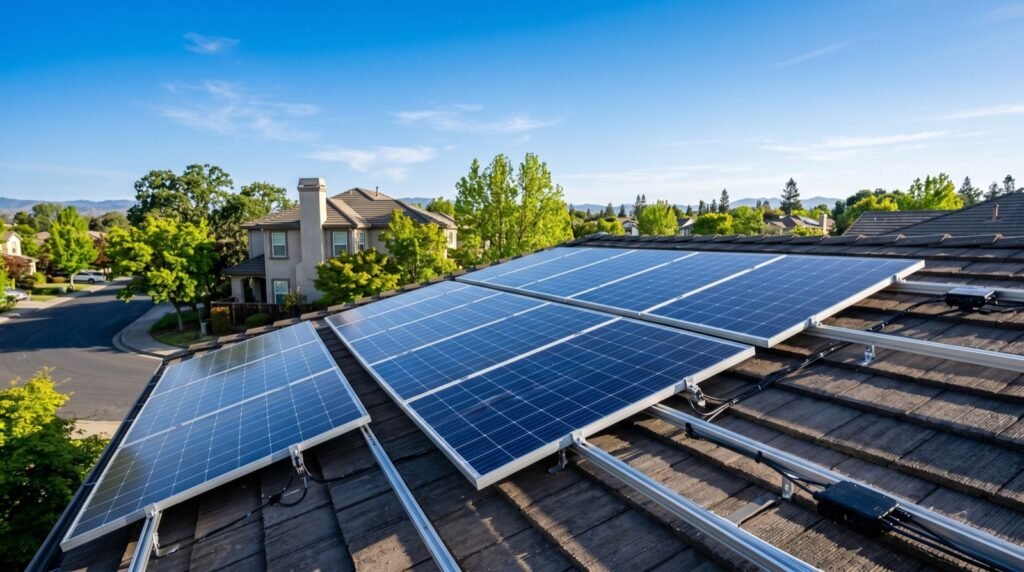
The inverter is the brain of any solar system, yet it is the component homeowners understand the least. Panels get all the attention because they sit visibly on the roof, but the inverter quietly decides how much of that sunlight actually becomes usable power in your home. Choose the wrong one and you cap your system’s potential, block future battery backup, or end up with equipment nobody in Kohat can service.
This guide breaks down solar inverters in plain language for Pakistani households in 2026: the main types, how to size one correctly, and what current pricing looks like. Whether you are building a fresh system or replacing an ageing unit, getting the inverter decision right saves years of frustration. If you want an solar company in Kohat to match hardware to your exact load, that pairs well with the fundamentals below.
What Does a Solar Inverter Actually Do?
Solar panels produce direct current, but your fans, lights, fridge, and air conditioners all run on alternating current. The inverter performs that conversion, turning raw DC from the panels into the clean AC your appliances need. Beyond conversion, a modern inverter also tracks the panels’ maximum power point, manages battery charging in hybrid setups, and coordinates with the grid for net metering.
Because it handles so many jobs at once, the inverter runs harder than almost any other part of the system. That constant workload is exactly why quality and correct sizing matter so much. A cheap, undersized inverter becomes the weak link that drags down an otherwise excellent array.
String, Hybrid, or Off-Grid: Which Type Fits You?
Not every inverter suits every home. The right choice depends on whether you want backup power, plan to add batteries later, or simply want to slash your grid bill. Here are the three main categories Pakistani buyers weigh in 2026.
- String (on-grid) inverter: The most affordable option. It converts solar power and syncs with the grid for net metering, but offers no backup during load-shedding.
- Hybrid inverter: The most popular choice today. It works with the grid, supports battery storage, and keeps essential loads running when the grid fails.
- Off-grid inverter: Built for locations with no grid connection at all, relying entirely on batteries and solar.
For most Kohat homes facing frequent outages, a hybrid unit hits the sweet spot. It lets you start grid-tied now and add batteries whenever your budget allows, without replacing the inverter. If you are comparing current models and rates, review the latest solar inverter price in Pakistan so you can budget with real figures.
Is a hybrid inverter worth the extra cost?
For load-shedding-prone areas, almost always yes. A hybrid inverter costs more upfront than a basic string model, but it future-proofs your system. You avoid buying a second inverter later when you decide to add battery backup, and you gain the ability to keep fans, lights, and a fridge running through outages. That flexibility usually justifies the premium within the first couple of years.
How to Size Your Inverter Correctly
Sizing is where many installations go wrong. An inverter that is too small clips your solar production on sunny days; one that is far too large wastes money and runs inefficiently. The goal is a sensible match between panel capacity and inverter capacity.
- Total your panel array wattage: Add up the rated output of all panels, for example a 5 kW array.
- Match the inverter capacity: Choose an inverter rated close to that array, typically within a 1.1 to 1.3 DC-to-AC ratio.
- Account for future expansion: If you plan to add panels or batteries, size the hybrid inverter with headroom.
- Check surge capacity: Motors in pumps and air conditioners draw a spike at startup, so confirm the inverter handles surge loads.
Getting this right is technical, which is why an experienced local team earns its keep. A proper load assessment prevents both the frustration of clipped power and the waste of an oversized unit.
Solar Inverter Pricing in Pakistan for 2026
Inverter prices track the rupee-dollar rate and import duties, so treat the ranges below as planning guides and confirm today’s figure before buying. Hybrid units carry a premium over string models because of their battery and backup capability.
| Inverter type | Capacity | Best for | Estimated price range (PKR) |
|---|---|---|---|
| String (on-grid) | 3–5 kW | Bill reduction, no backup | 110,000 – 220,000 |
| Hybrid | 5 kW | Backup + battery ready | 250,000 – 400,000 |
| Hybrid | 8–10 kW | Larger homes, heavy loads | 420,000 – 700,000 |
| Off-grid | 3–5 kW | No grid connection | 180,000 – 350,000 |
Remember that a hybrid inverter is only half the backup equation. You still need batteries to store energy for use after sunset, and those form a separate line item in your budget.
Efficiency, Warranty, and Local Support
Beyond price and type, three quiet factors separate a good inverter from a regrettable one. First, efficiency: leading inverters convert at roughly 97 to 98 percent, meaning very little energy is lost in conversion. The National Renewable Energy Laboratory has long tracked how inverter efficiency shapes total system yield, and even a couple of percentage points add up over decades.
Second, warranty. Reputable inverters carry five to ten year warranties, and a longer term signals manufacturer confidence. Third, and most practical in Kohat, local service support. An inverter from a brand with technicians and spare parts nearby gets fixed fast; an obscure import can leave you offline for weeks. Always confirm that the brand you choose can actually be serviced in your area.
Frequently Asked Questions
What size inverter do I need for a 5 kW solar system?
A 5 kW array typically pairs with a 5 kW inverter, allowing a modest DC-to-AC oversizing ratio of around 1.1 to 1.3. If you plan to add panels or batteries later, choosing a slightly larger hybrid inverter gives you room to grow without replacing the unit.
Can a string inverter provide backup during load-shedding?
No. A standard on-grid string inverter shuts off when the grid goes down for safety reasons and cannot power your home during outages. If you want backup, you need a hybrid or off-grid inverter paired with batteries.
How long do solar inverters last in Pakistan?
A quality inverter generally lasts 10 to 15 years, which is shorter than the 25-year life of the panels. Choosing an efficient, well-cooled unit from a brand with local support helps it reach the upper end of that range even in hot conditions.
Do I need a hybrid inverter if I only want to lower my bill?
Not strictly. If your only goal is reducing your grid bill and you rarely need backup, a string inverter is cheaper and effective. But if outages are frequent or you may add batteries later, a hybrid inverter is the smarter long-term investment.
Conclusion: The Inverter Decides Your System’s Ceiling
Panels capture the sunlight, but the inverter determines how much of it powers your life. In 2026, the smart path for most Kohat households is a correctly sized hybrid inverter from a serviceable brand, matched to your real load and ready for future batteries. Get that choice right and your solar system performs at its full potential for years. Want an inverter recommendation tailored to your appliances and outage patterns? Reach out for a free load assessment and a straight, no-pressure quote.